

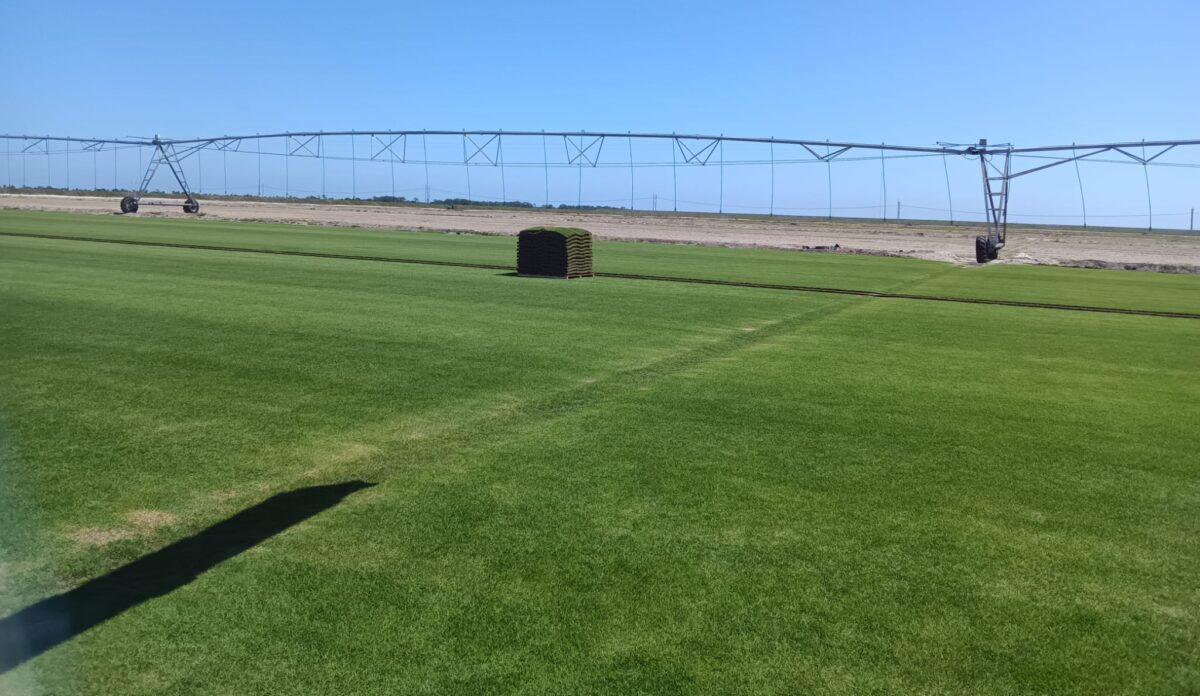
Zoysia, Bermuda, Centipede and St. Augustine are warm-season grasses. They grow when the soil is warm and go dormant after the first hard frosts. That cycle decides how quickly new sod roots and how much care it needs in the first weeks.
Late spring through summer: fastest rooting
Once the soil has warmed in spring and the lawn grasses around town are fully green, new sod roots quickly, often taking hold in a couple of weeks. This is the most forgiving window. The trade-off in July and August is heat: new sod needs steady water, and pallets should be laid the day they arrive.
Early fall: still a good window
September and early October usually bring milder days with soil that is still warm. Sod laid then has time to root before dormancy and needs less water than in midsummer.
Late fall and winter: possible, with care
Sod laid after the grass goes dormant will not root much until spring. It can still work for a new home or a muddy yard, but the sod has to be kept from drying out in dry, windy weather, and it should never be laid on frozen ground. Expect it to stay tan until spring green-up.
Which grass and when
- Bermuda roots aggressively in summer heat.
- Zoysia roots more slowly, so earlier in the season gives it more time to establish.
- Centipede and St. Augustine are the least cold-hardy, so spring and early summer give them the most time to root before winter.
Next, read how to water new sod, or compare grass options.
Ready to plan your lawn? Call 833-SOD-2YOU or (833) 763-2968 or send your project details for project-specific pricing.